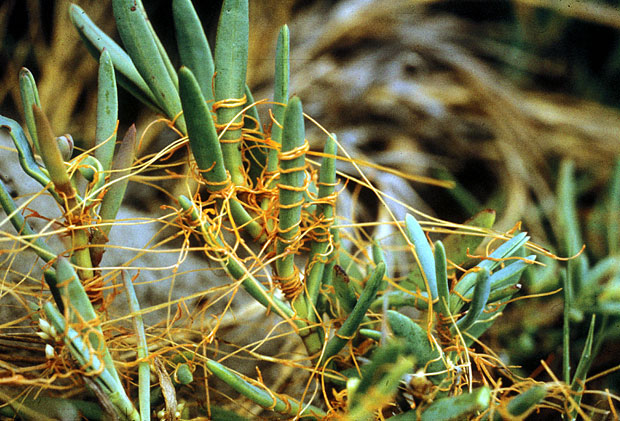
The Bloodhounds of the Plant World (Cuscuta sp.)

(Via: Marine Science)

Common Names: Dodder, Goldthread, Witch’s Shoelaces

A.K.A.: Genus Cuscuta

Vital Stats:

  • Approximately 200 species
  • Part of the Convolvulaceae family, which includes morning glory and sweet potato
  • Only 15-20 species are considered to be problematic crop parasites

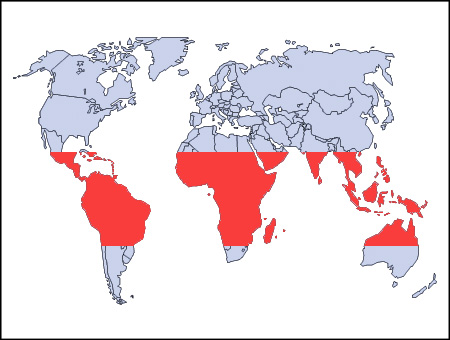
Found: Throughout temperate and tropical parts of the world

It Does What?!

We’ve discussed a few parasites on this blog already, and they’ve all been pretty typical of what comes to mind when we think of parasitic organisms- tiny, malignant little creatures that invade the host’s body, steal its resources, and, in some cases, eat its tongue. But when we think ‘parasite,’ we don’t usually think ‘plant.’ As it turns out, there are an estimated 4500 parasitic species just among the angiosperms, or flowering plants. Among them, dodders have to be one of the strangest.

Found nearly throughout the world, these vine-like plants begin as tiny seeds that germinate late in the spring or summer, after their potential host plants have established themselves. The young seedling has no functional roots and little or no ability to photosynthesize, so initially, it must make do with what little nutrition was stored in its seed. This isn’t much, so the plant has only a few days to a week to reach a host before it dies. To better its chances, the dodder stem swings around in a helicopter-like fashion as it grows, trying to hit something useful.

Much more impressive is the plant’s other method of finding suitable hosts- a sense of smell. Recent research has found that, uniquely among plants, the dodder can actually detect odours given off by surrounding plants and grow towards them. In experiments, the seedlings were found to grow toward the scent of a tomato, even if no actual plant was present. What’s more, they are capable of showing a preference among hosts. Presented with both tomato plants, which make excellent hosts, and wheat plants, which make poor hosts, seedlings were found to grow toward the aroma of tomatoes much more often. Like herbivores, they can use scent to forage amongst a variety of species for their preferred prey.

Smells like lunch… even to other plants.
(Via: Wikimedia Commons)

Once a host plant is found, the dodder begins to twine itself around the stem and to form haustoria (singular: haustorium). These are like tiny tap roots that pierce the host’s stem and actually push between the living cells inside until they reach the vascular system. Once there, the haustoria enter both the xylem (where water and minerals move upward from the roots) and the phloem (where sugars from photosynthesis move around the plant). From these two sources, the dodder receives all its nutrients and water, freeing it from any need for a root system, or even a connection to the soil. And since it doesn’t need to capture solar energy, all green pigment fades from the parasite, and it turns a distinctive yellow or red colour. Leaves aren’t necessary either, which is why the plant is essentially nothing but stem, explaining its common name of “witch’s shoelaces.”
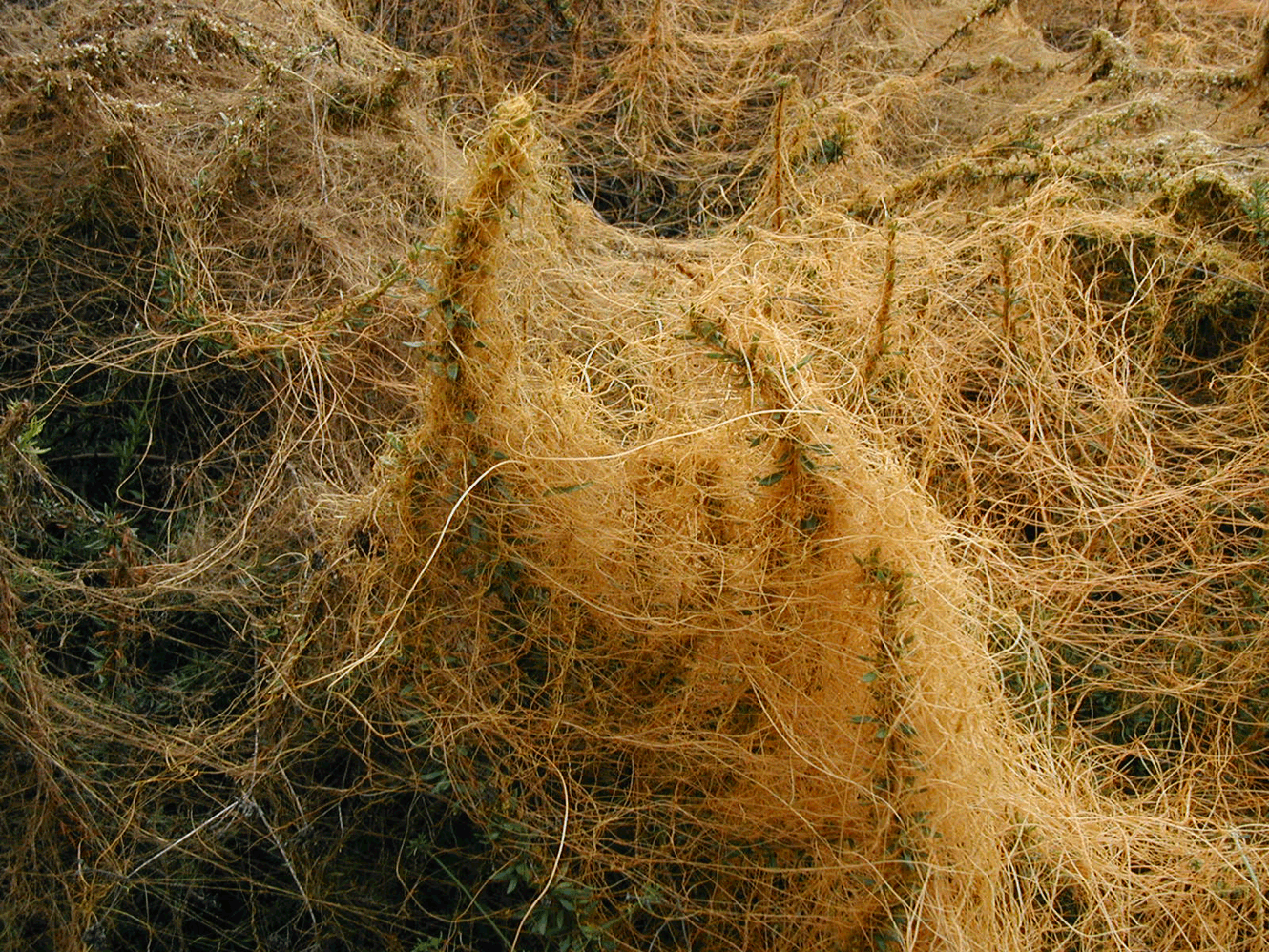
Not what you want to see when you head out to weed the garden.
(Via: County of Los Angeles)

Once it gets comfortable on its new host, the dodder can grow at a rate of several centimetres a day (impressive for a plant) and produce stems of a kilometre or more in length, quickly overrunning an area. It can also attach itself to additional hosts – hundreds, in fact – which is problematic, because at this point it becomes the plant equivalent of a dirty shared needle. Since the vasculature of the hosts is connected, any virus present in one host can be freely transferred to any other. This ability, coupled with its affinity for potatoes, tomatoes, tobacco, and several other important crops, makes dodder a major nuisance for many farmers. And since it’s able to regenerate from just a single, tiny haustorium left in a host plant, it’s really hard to get rid of. There’s always a flip side, though; in some ecosystems, dodder can actually maintain biodiversity by preferentially parasitising the more competitive plants, allowing the weaker ones to survive. It seems dodder may also be the Robin Hood of the plant world.

[Extra Credit: Here’s a video showing how dodder can completely take over a group of nettle plants, complete with ominous soundtrack. Narrated by the fantastic Sir David Attenborough.]

Says Who?

  • Costea (2007-2012) Digital Atlas of Cuscuta (Convolvulaceae). Wilfred Laurier University Herbarium, Ontario, Canada
  • Furuhashi et al. (2011) Journal of Plant Interactions 6(4): 207-219
  • Hosford (1967) Botanical Review 33(4): 387-406
  • Pennisi (2006) Science 313: 1867
  • Runyon et al. (2006) Science 313:1964-1967
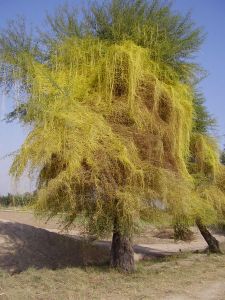
    Cuscuta: 1, Acacia: 0
    (Via: Wikimedia Commons)

Anglerfish: Absorbing Ladies and their Freeloading Mates

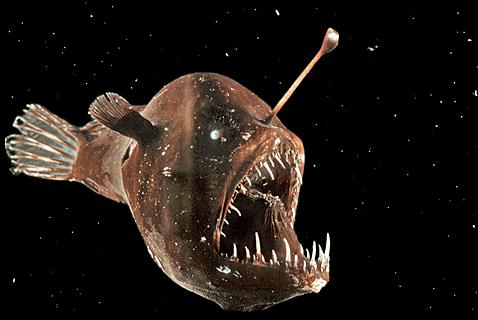
(Via: Inglestic)

Common Name: Anglerfish

A.K.A.: Order Lophiiformes

Vital Stats:

  • Comprised of 322 species in 18 different families
  • Most range in size from that of a ping pong ball to that of a football
  • Some can reach over a metre in length and weigh 27kg (59lbs.)

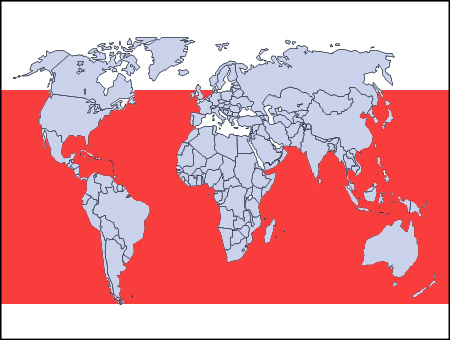
Found: Throughout the world’s oceans, mostly in deeper regions

It Does What?!

The more dissimilar a creature’s habitat is to our own, the more dissimilar we have to expect its lifestyle to be, so when we plumb the pitch black, cold, high pressure depths of the ocean, we’re counting on some serious weirdness. The anglerfish goes above and beyond in this department.

First off, have you seen these things? They’re essentially a set of mobile fangs. And what’s with that thing hanging down off their heads? It’s all part of an efficient setup that allows the anglerfish to survive in an environment with minimal light and sparse prey. These fish are what biologists call “sit and wait” predators. In order to avoid expending precious energy, they hang motionless in the water, waiting for something edible and foolish to approach. The dangly piece is actually a lure, filled with bioluminescent (glowing) bacteria. Seeing the glow and thinking it might be food, curious creatures draw near and are quickly gobbled up by the anglerfish. That enormous mouth, combined with a flexible bone structure, allows the fish to swallow very large prey, relative to its own size.

Really… how unobservant must their prey be?
(Via: National Geographic)

Amazingly, the anglerfish’s horrifying appearance isn’t its most notably odd trait. Not even close. You see, all these characteristics we’ve discussed so far are only present in the female of the species. The male is a different creature entirely. Many times smaller than the female, you’d be hard pressed to immediately recognise a male anglerfish as even being part of the same species. In fact, researchers initially thought they were babies. Their adult form is only 6-10mm (0.24-0.39”) long in some species, placing male anglerfish among the smallest vertebrates on earth.

What’s more, they don’t have a functional digestive system… they literally don’t ever eat. Sustained only by the energy in his own tissues, the young male must find a female and mate before he starves to death. To aid in his quest, he has very well-developed eyes and huge nostrils, which allow him to follow the pheromone trail of a potential mate.

The somewhat less intimidating male anglerfish.
(Via: Anglerfish Info)

Now it gets weird. Upon locating a female, the male swims up and latches on to her with his teeth, usually on the lower side of her body. He then starts to release an enzyme which dissolves both his mouth and her skin, right down to their respective blood supplies. Soon, their bodies actually fuse together, and blood from the female begins to nourish the now-parasitic male. In some species, this fusion goes all the way to the base of the male’s skull, giving him the appearance of having his entire head absorbed into his mate’s body. Once fused, the male undergoes a growth spurt, thanks to his new food source, but his internal organs, as well as his eyes and nostrils, degenerate and atrophy. The exception, of course, being his testicles, which grow along with the rest of his outer body.

A female anglerfish and her clingy boyfriend.
(Via: Wikimedia Commons)
Her mate degenerated down to a mere sperm-producing external organ, the female anglerfish is now essentially a self-fertilizing hermaphrodite. With anywhere between one and eight males attached to her, she has an abundant supply of sperm available whenever she has ripe eggs to be fertilized. As for the males, they will “live” for as long as the female lives, and continue to reproduce indefinitely.

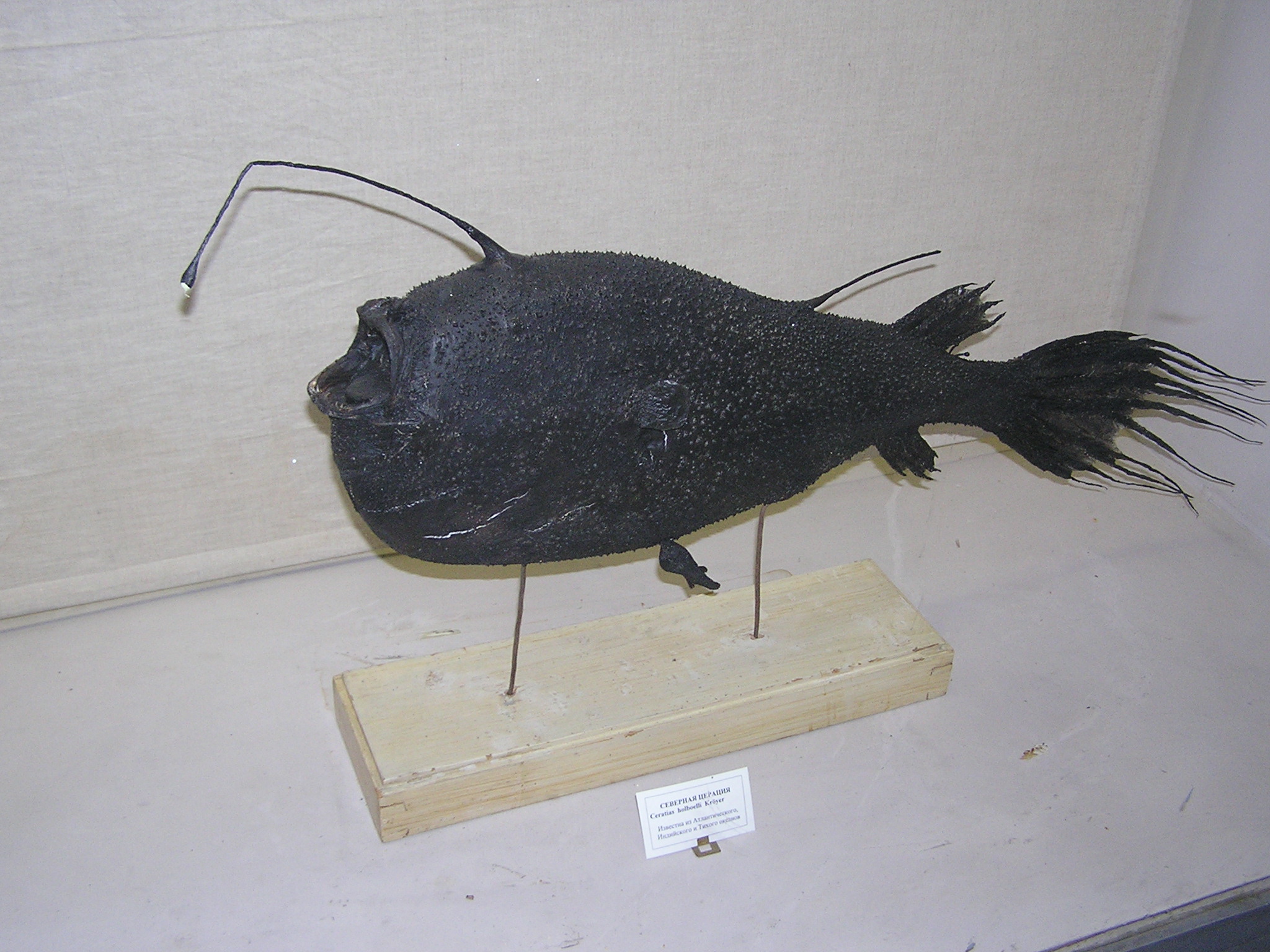
[Fun Fact: the species Ceratias holboelli has the most extreme size difference between the sexes. Females are more than 60 times the length and about half a million times heavier than the males.]

[And if you like your science lessons in cartoon form, be sure to check out this out.]

Says Who?

Come to Mama!
(Via: fugly.com)

Missing Carpels & the Building Blocks of Science

(Photo by: Domingos Cardoso)

Common Name: Amarelão (Brazil), Grapia (Argentina), Khare Khara (Bolivia)

A.K.A.: Apuleia leiocarpa

Vital Stats:

  • Once considered a genus of three different species, now collapsed down to one by taxonomists
  • The only trimerous (three-parted) flower in the whole legume family
  • Male flowers grow an extra stamen in place of the missing carpel

Found: In the rainforests of central South America

It Does What?!

Nothing quite as bizarre as our usual subjects, actually, but stick with me here. This week, I’m attending the annual conference of the American Society of Plant Taxonomists in Columbus, Ohio. I’ll be giving a talk on some of my research dealing with Apuleia and the development of its flowers. I thought I’d take this week to share some of that research here, and to try to make it interesting for people who aren’t into obsessing over obscure plants. If you still find this entry painfully tedious, though, rest assured, we’ll be back to freaks and oddities next week.

Apuleia leiocarpa is part of the legume family, which, if you’re from a temperate part of the world, brings to mind little annuals like beans and peas and clover. In the tropics, though, legumes are just as often towering trees of the rainforest canopy (like Apuleia) or scraggy shrubs of arid grasslands (such as Acacia). Most of the nearly 20,000 species of legumes have flowers with the same basic groundplan: 5 sepals, 5 petals, 10 stamens (the male organs), and a single carpel (where the fruit and seeds form). There are closely related chunks of the family, though, in which some of these floral organs have been lost over the course of evolution. (Now, ‘lost’ can mean two things; either the organ starts to grow and is suppressed before it finishes developing, or it just never forms at all. To the naked eye, these two kinds of loss look exactly the same. I’ll come back to this later.) Apuleia is one such legume- it has entirely lost two of its sepals, two of its petals, and most of its stamens, making for a very simplified flower.

The Hermaphodite (‘Normal’) Flower
S=sepal, P=petal, A=anther/stamen, C=carpel, St=stigma

What’s more, it now forms two different types of flower (called ‘morphs’). If you were to look closely at a flowering branch on one of these trees, you would see that the vast majority of the flowers were male-only, having no carpel with which to form fruit. Only every fourth or fifth flower would be the hermaphrodite type that we think of as a ‘normal’ flower. Botanists refer to this type of plant as being andromonoecious (pronounced “an-dro-mon-ee-shus”). So why would a tree evolve to become andromonoecious? There are a couple of different theories, based on two different ways that the male-only flowers can be produced.

In the first and most common type of andromonoecy, all the flowers on the plant begin as normal hermaphrodites. There are flowers of all different ages, so while some are beginning to open, others haven’t finished forming yet. Pollination starts on the earlier flowers, and the plant detects that it has far more ovaries (future seeds) than it’s going to need. Maybe the soil isn’t providing enough nutrition to produce all those potential fruits, or maybe there’s a drought in progress. So, according to its needs, the tree simply suppresses the development of the carpels in the younger flowers before they have time to mature, leaving parts of each branch with hermaphrodite flowers and parts with male flowers.

The Male-Only Flower
S=sepal, P=petal (both removed)
Arrow= where the carpel would have been

In scenario two, some flowers never develop carpels; they are male-only from the time they are first formed. This type of andromonoecy is thought to occur because the tree requires large amounts of pollen to reproduce successfully (perhaps the species is wind pollinated and individuals tend to be far apart, for example), and it’s “cheaper” to produce male flowers than hermaphrodites. In this situation, we don’t see the pattern of younger versus older flowers with respect to which ones are male.

That white asterisk in the very middle shows the hole through which the carpel would have emerged. It’s just a small, empty cavity in the male flower.

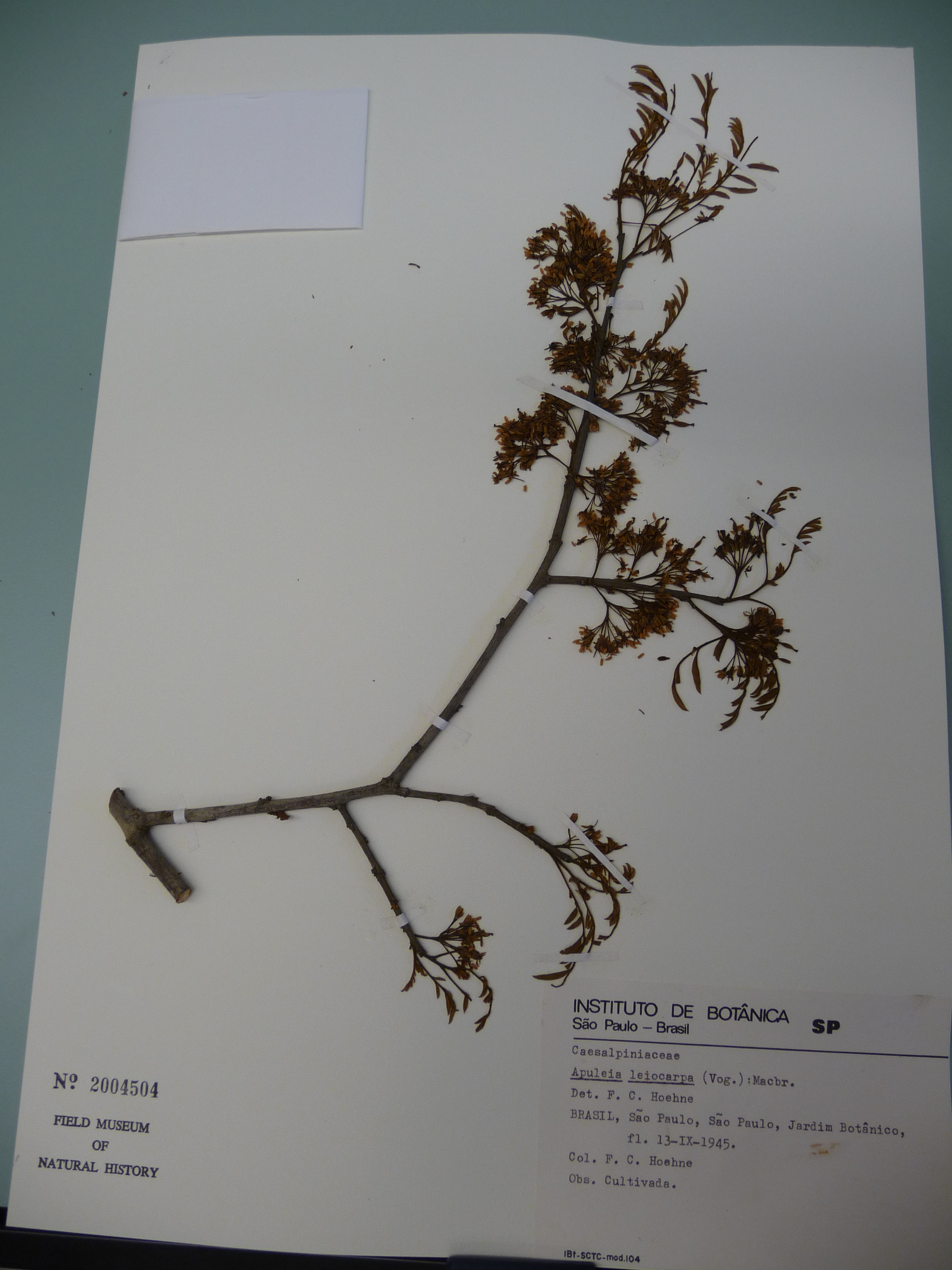
So which type of andromonoecy does Apuleia have? In order to find out, a colleague and I studied pressed herbarium specimens as well as flowers preserved in alcohol. The flowers, we dissected and viewed under an incredibly powerful microscope called a scanning electron microscope, which allowed us to see minute details, such as where a suppressed carpel might have been. In the end, we found that male Apuleia flowers show no sight of having ever developed a carpel. We also noticed that the hermaphrodite flowers always occurred symmetrically, right in the centre of a group of male flowers, a pattern that we wouldn’t see if the andromonoecy was environmentally influenced.

So in the end, we’re able to say that in this species, the different floral morphs probably arose in evolution due to an increased need for pollen, rather than as a control on fruit production. Groundbreaking… right? Well, maybe not, but obscure little discoveries like this are the building blocks for the big important breakthroughs we read about in the news. If you want to make something huge, you need a good foundation to start from.

Now imagine spending three hours of your life staring at this.
Science is so glamourous.

Says Who?

  • Beavon & Chapman (2011) Plant Systematics and Evolution 296: 217-224
  • de Sousa et al. (2010) Kew Bulletin 65: 225-232
  • Gibbs et al. (1999) Plant Biology 1: 665-669
  • Spalik (1991) Biological Journal of the Linnean Society 42: 325-336
  • Zimmerman et al. (In Press) International Journal of Plant Sciences

EVOLUTION TAG TEAM, Part 2: Sex & the Synconium

The second in an ongoing series of biology’s greatest duos. (Check out Parts One and Three)

(Via: Mastering Horticulture)

Common Name (Plants): Fig Trees

  • A.K.A.: Genus Ficus

Common Name (Wasps): Fig Wasps

  • A.K.A.: Family Agaonidae

Vital Stats:

  • Approximately 800 species of figs
  • Most are trees, but some are shrubs and vines
  • Approximately 640 species (20 genera) of fig wasps
  • All are obligate pollinators of figs

Found: Throughout the Tropics

It Does What?!

Snacked on any Fig Newtons lately? Tasty, right? Like the ad says, “A cookie is just a cookie, but a Newton is fruit and cake.”  …And wasps.

They must have run out of space on the package for that last part.

Before you toss out your favourite teatime treat, I should point out that without those wasps, the figs themselves wouldn’t exist. [Personally, I love Fig Newtons and will eat them regardless of any insects present.] This plant-insect pairing actually represents one of the most stable symbioses out there, with evidence suggesting it has existed for over 65 million years.

Now with 10% more Wings
(Via: Wikipedia)

While it’s not entirely clear how this arrangement evolved in the first place, fig trees produce a unique structure called a synconium, in which the flowers are actually inside the part we think of as the fruit. This synconium, which can contain up to 7000 flowers, depending on the fig species, has a tiny hole at the tip called an ostiole. In order for the flowers to be pollinated and the fruit to grow, a female wasp must squeeze through that hole, often losing her wings and antennae in the process, and distribute pollen that she carries in a sac on her abdomen. As she does so, she also uses her ovipositor to reach down into some of the female flowers and lay her eggs in their ovaries, where a gall is formed and the larvae can develop. Then she dies and ends up in a cookie. The End.

But hold on, let’s remove humans from the equation for a moment. She dies, but her eggs hatch into little moth larvae which use the growing fig for nutrition. Once they’re old enough, the young wasps mate with one another inside the fig (another nice mental image for snacktime), and the females gather pollen from the male flowers and store it inside their abdominal pollen baskets (yes, that’s actually what they’re called). The wingless male wasps have a simple, three step life: 1) mate with females, 2) chew a hole through the fig so they can leave, 3) die. That’s pretty much it for them. They may escape the nursery with the females, but they’ll die shortly thereafter, regardless. In fact, even the females have a pretty rough deal; from the time they’re old enough to mate, they have about forty-eight hours to get their eggs fertilized, gather pollen, find a new synconium, distribute the pollen, and lay their eggs. Two days, and their life is over. No pursuit of happiness for the fig wasp, I’m afraid.

“What does it all mean?”
(Via: BugGuide.net)

As with any long-standing mutualism, there are, of course, parasites ready and waiting to take advantage of it. These parasites are wasps which are able to enter the synconium and lay their eggs, but which do not pollinate the fig. Although their eggs will crowd out those of the fig wasps, decreasing the number of fig wasp larvae born, they are kept in check by the fact that any unpollinated synconium will be aborted by the tree and drop to the ground, taking the parasite eggs with it. The nonpollinating wasps are therefore kept from being a serious threat to the tree’s pollinators.

So there you have it, another of evolution’s great matches. The wasps get an edible nursery, the trees get pollinated, and we get tasty fruits with suspicious crunchy bits that probably aren’t dead wasp bodies, so just try not to think about it too much…

Seeds, or wasp eggs? You be the judge!
(Via: This Site)

[Fun Fact: The symbiosis between fig species and their corresponding wasp partners is so specific (often 1:1), that the shape of the ostiole actually matches the shape of the head of the wasp species which will pollinate it.]

[For those who would like to read about figs and fig wasps in much greater detail (such as how this works when the male and female flowers are in different figs), check out this excellent site for all you could ever want to know.]

Says Who?

  • Compton et al. (2010) Biology Letters 6: 838-842
  • Cook et al. (2004) Journal of Evolutionary Biology 17: 238-246
  • Kjellberg et al. (2001)Proceedings of the Royal Society of London, Biology 268: 1113-1121
  • Proffit et al. (2009) Entomologia Experimentalis et Applicata 131: 46-57
  • Zhang et al. (2009) Naturwissenschaften 96: 543-549