How to Stay Cool the Lungfish Way

Via: Science News for Kids

Common Name: The Lungfish

A.K.A.: Subclass Dipnoi

Vital Stats:

  • 6 species; 4 in Africa, 1 in South America, 1 in Australia
  • Some species can reach up to 2m (6.6’) long and weigh 43kg (95lbs.)
  • Omnivorous, eating plants, insects, crustaceans, worms, fish, and frogs
  • Largest genome of all terrestrial vertebrates at ~133 billion base pairs

Found: Slow-moving freshwater bodies in South America, Africa, and Australia

It Does What?!

Well, they’re not much to look at, but in the “quietly carrying on while everything drops dead around you” department, the lungfishes are tops. These large, eel-looking creatures are what biologists refer to as “living fossils”, species which have existed in more or less their present form for a very, very long time. In the case of the lungfishes, around 400 million years. For the sake of comparison, this was around the same period that plants developed roots and leaves. That long ago. In fact, researchers believe that the lungfishes are the closest living relatives of the terrestrial vertebrates (that is, anything with a spinal column that lives on land).
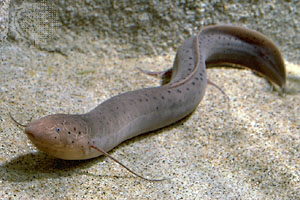
These will probably outlast humanity.
Via: One More Generation

So what makes these things so interesting, besides being old? First off, they breathe air, as you might have guessed from their name. Australian lungfishes have a single lung, and, while they normally breathe through their gills, are able to supplement their oxygen intake with air during times of high exertion or when their water gets stale (Fun side note: During mating, Australian lungfishes make loud burping noises at the surface of the water which are thought to be part of the courtship ritual. I’ll refrain from making any Aussie jokes here… ). African and South American lungfishes, on the other hand, have two lungs and breathe nothing but air. Their gills are completely atrophied, such that they could actually drown if kept under for much longer than their usual 5-8 minutes between breaths.
“Hey! I’m trying to aestivate in here!”
Photo by: Tobias Musschoot

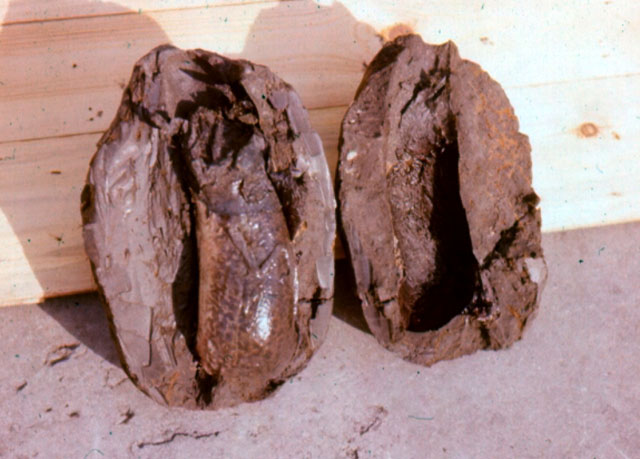
This ability to breathe without water results in the other fantastic ability of subclass Dipnoi. South American and African lungfish live in habitats which often dry up completely during the hottest part of the year. The fishes’ gross but brilliant answer to this is to burrow up to half a metre down into the soft mud and excrete a huge amount of mucous. As the surrounding mud dries up, the mucous forms a hard shell which keeps the curled up lungfish moist and cool. A small hole at the top of this snot-cocoon allows the fish to breathe. It’s metabolism slowed to only a small fraction of the normal rate, the creature will aestivate (like ‘hibernate’, but without the cold) like this for several months until the rains return. Laboratory experiments have shown that an African lungfish can remain alive under these conditions for as long as six years.

“Granddad”: probably older than your Granddad
Via: Shedd Aquarium

Aside from their amazing survival abilities, these fish have unusual lives, as fish go. They are extraordinarily long-lived. The Shedd Aquarium in Chicago holds an Australian lungfish known as “Granddad” which arrived there as an adult in 1933, making him at least 80 years old. Females of this species don’t even mate until they’re at least 22 years old (or so they tell their parents). What’s more, some species actually care for their young. The mother and father build an underwater nest for their offspring, which can only breathe via their semi-atrophied gills for the first seven weeks, and the father uses his body to release additional oxygen into the surrounding water, helping them to breathe. So, dual childcare: not such a new idea after all.

[Extra Credit –  Here’s a short video of a lungfish being stalked by a pelican. Spoiler: It ends badly for the lungfish.]

Says Who?

  • Brinkmann et al. (2004) Journal of Molecular Evolution 59: 834-848
  • Fishman et al. (1992) Proceedings of the American Philosophical Society 136(1): 61-72
  • Glass (2008) Respiratory Physiology & Neurobiology 160: 18-20
  • Joss (2006) General and Comparative Endocrinology 148: 285-289
  • Lee et al. (2006) General and Comparative Endocrinology 148: 306-314
  • www.fishbase.org

What’s the matter, louse got your tongue? (Cymothoa exigua)

Via: Parasite of the Day

Common Name: The Tongue-Eating Louse

A.K.A.: Cymothoa exigua

Vital Stats:

  • Females are 8-29mm long by 4-14mm wide (0.3”-1.1” x 0.16”-0.55”)
  • Males are 7.5-15mm long by 3-7mm wide (0.3-0.6” x 0.12”-0.28”)
  • Preys on 8 species of fish from 4 different families

Found: In the Eastern Pacific, between the Southern U.S. and Ecuador

It Does What?!

With a name like “Tongue-Eating Louse”, you know this is going to be viscerally horrible, but bear with me… it’s also pretty neat. Despite the name, these aren’t actually lice, but parasitic crustaceans known as isopods. While there are dozens of species in the genus Cymothoa, most are parasites which live in the gills of fish and are, relatively speaking, unremarkable. But Cymothoa exigua is something special. While the male of the species (and this is a slippery term, as they can change sex when necessary) lives in fish gills, the female has developed an altogether original strategy.

Try to enjoy a tuna sandwich now.
Via: Smithsonian.com

Entering through the gills, the female takes up a position at the back of the fish’s mouth and attaches herself to the base of its tongue. She then pierces the tongue with her front appendages and begins to consume the blood inside it. Over time, the lack of bloodflow causes the tongue to slowly wither up and fall off. What’s left is a stump consisting of about 10% of the original tongue (yes, someone measured this). The parasite can now attach herself to the stump using her seven pairs of hook-like pereopods (read: ‘feet’) and actually begin to function as the fish’s tongue.

What’s really amazing is how well this seems to work. The parasite has evolved a body shape which closely matches the curves of the inside of the host’s mouth. Unlike our tongues, a fish tongue has no real musculature or flexibility; its only real function is to hold food against the fish’s teeth. With the parasite in place, the host is able to use its body to do exactly that. While the isopod is thought to feed on the fish’s blood, researchers have found that infected hosts have normal body weights and typical amounts of food in their digestive tract when caught. This is, to date, the only known case of a parasite functionally replacing an organ in its animal host.

Once it’s in there, this thing’s not coming out without a fight.
Via: This Site

Because edible snapper fish are amongst the host species of C. exigua, there have been cases of the parasite showing up in people’s supermarket purchases, including one person who thought they had been poisoned after eating one. So are they dangerous? Not to eat, no, but researchers tell us they can give a nasty little bite, given the opportunity. So the moral of this story is: if you bring home a fish for dinner and see an evil-looking parasite posing as its tongue… don’t stick your finger in its mouth.

.

Says Who?

  • Brusca & Gilligan (1983) Copeia 3: 813-816
  • Brusca (1981) Zoological Journal of the Linnean Society 73(2): 117-199
  • Williams & Bunkly-Williams (2003) Noticias de Galapagos 62: 21-23
See you in your nightmares.

Advertising in the Wild… Not So Very Different (Ophrys sp.)

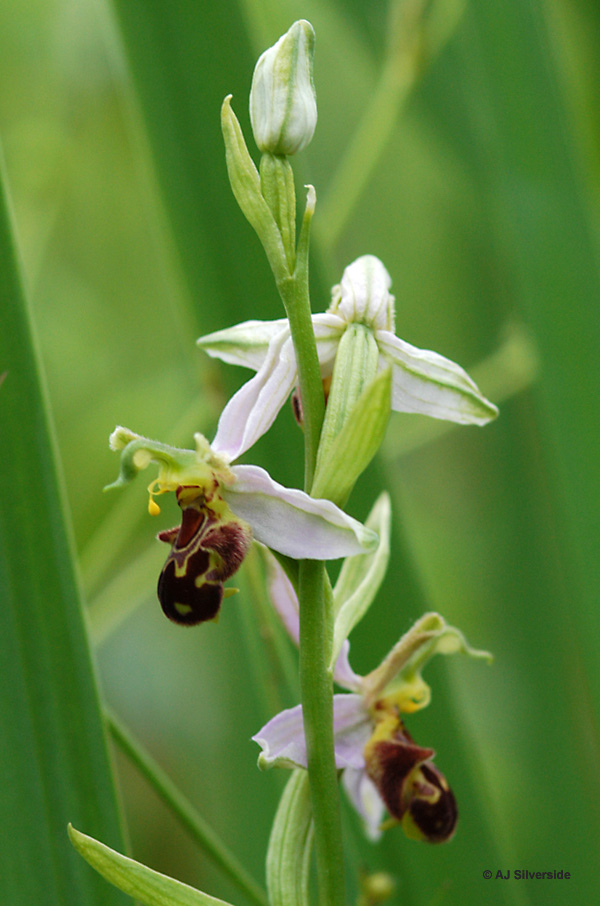
(Via: lastdragon.org)

Common Name: Bee Orchids

A.K.A.: Genus Ophrys

Vital Stats:

  • 30-40 recognised species in the genus
  • Grows to a height of 15-50 cm (6-20”)
  • The name Ophrys comes from a word meaning “eyebrow” in Greek, for the fuzzy edges of the petals
  • First mentioned in ancient Roman literature by Pliny the Elder (23-79 A.D.)

Found: Throughout most of Europe and the British Isles

It Does What?!

We tend to think of animals (including humans) as using plants to serve our ends exclusively- we eat them, clothe ourselves with them, build homes with them, and so on. But for all the obvious ways in which the animal kingdom takes advantage of the plants, there are numerous, more subtle, ways that they use us to do their bidding. One of those ways is as pollinators; plants enlist animals to help them reproduce. And while that enlistment often takes a rather mundane form – a bit of pollen brushed onto a bird’s head as it sips nectar, say – sometimes a group of plants will get a bit more creative about it. Such is the case with the bee orchids.

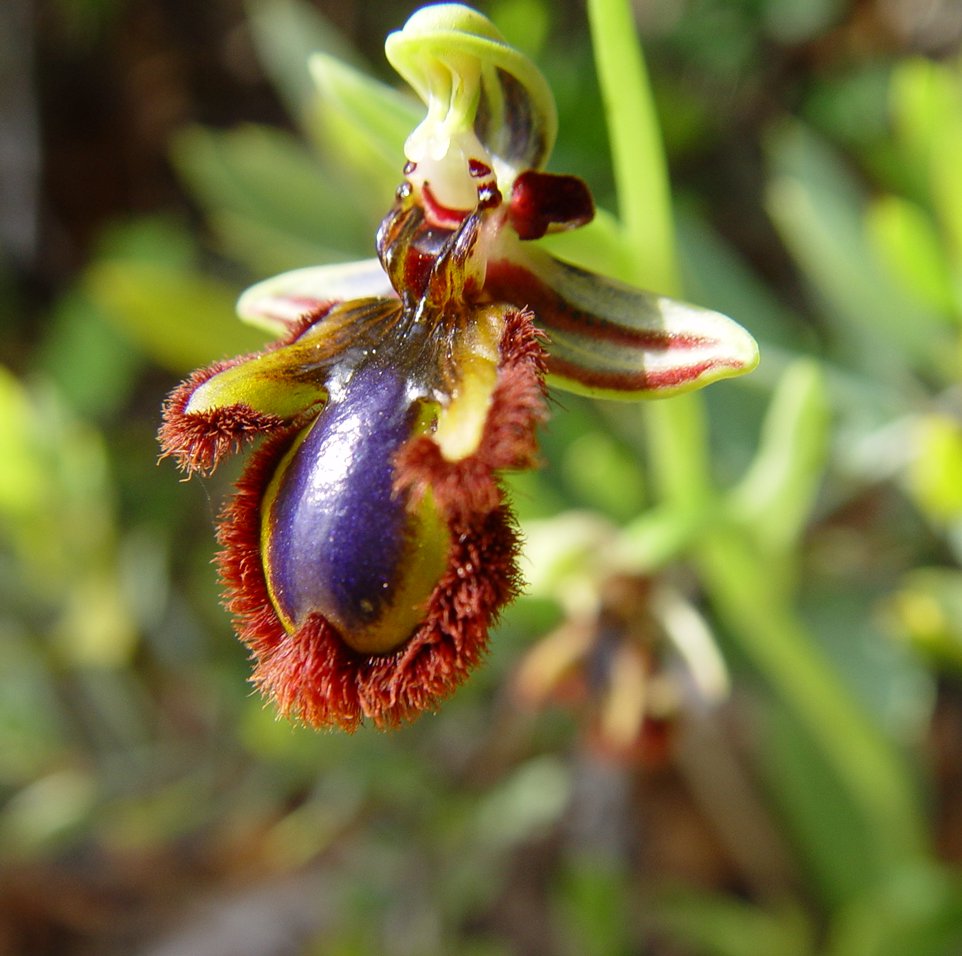
These highly specialised flowers depend on very specific relationships with their pollinators; often only a single species of bee (or wasp, in some cases) will pollinate a given species of orchid. Without those pollinators, the orchids can’t produce seed and would die out. So how do you control a free-roving creature that has other places to be? Why, sex, obviously. (Isn’t that the basis of most advertising?) The bee orchid has evolved a flower that not only looks, but smells like a virgin female of the bee species which pollinates it.

May not be appropriate for younger readers.
(Via: This Site)

At a distance, the bee detects the pheromones of a receptive female. Once he moves in closer, there she is, sitting on a flower, minding her own business. So he flies in and attempts to do his man-bee thing, only to find that he’s just tried to mate with a plant. Mortified (I imagine), he takes off, but with a small packet of pollen stuck to his head. He’s memorised the scent of this flower now and won’t return to it, but amazingly, the orchids vary their scent just slightly from one flower to the next, even on the same plant, so that the duped bee can never learn to distinguish an orchid from a female. What’s more, because the scent is more different between plants than between flowers on the same plant, he is more likely to proceed to a different plant, decreasing the chances that an orchid will self-fertilise.

Hilariously, researchers have shown that, due to their higher levels of scent variation compared to true female bees (variety being the spice of life, right guys?), male bees actually prefer the artificial pheromones of the orchids over real, live females. In experiments where males were given a choice between mating with an orchid and mating with a bee, they usually chose the flower, even if they had already experienced the real thing.

So there you have it. Plants: master manipulators of us poor, stupid animals.

Who could resist?
(Via: Wikia)

Says Who?

  • Ayasse et al. (2000) Evolution 54(6): 1995-2006
  • Ayasse et al. (2003) Proceedings of the Royal Society, London B. 270: 517-522
  • Streinzer et al. (2009) Journal of Experimental Biology 212: 1365-1370
  • Vereecken & Schiestl (2008) Proceedings of the National Academy of Science 105(21): 7484-7488
  • Vereecken et al. (2010) Botanical Review 76: 220-240

One Week Off for Moving

Questionable Evolution will be taking a one week hiatus as I frantically attempt to throw everything I own into boxes and drive it across town.

Pretty much like this.

We’ll be back June 13th with a story of how plants use and abuse their animal pollinators. Stay tuned!